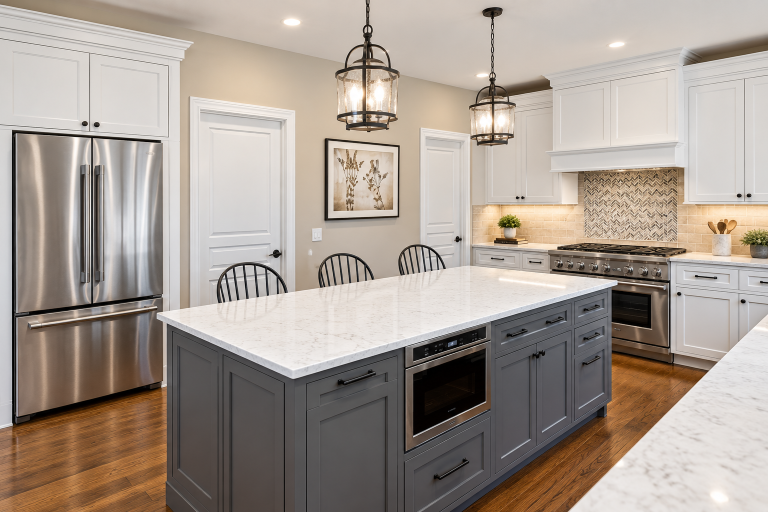
Kitchen flooring is an investment in daily comfort and a room where meals and memories are shared. Compare appearance, durability, cleaning, and standing comfort, along with the condition of the floor underneath.
Porcelain and Ceramic Tile
Tile offers durable surfaces and many designs. Porcelain generally absorbs less water than nonporcelain ceramic tile. Both can feel hard and cool underfoot, and grout needs cleaning. Choose tile rated for floors and consider slip resistance. Proper structural support and installation beneath the tile help prevent cracks.
Luxury Vinyl Plank and Tile
Luxury vinyl can resemble wood or stone and generally feels warmer and more forgiving than tile. Many products are waterproof, but the entire floor assembly is not automatically floodproof. Scratches, dents, and seam damage remain possible. Compare wear layers, warranties, and installation instructions. Floating products need expansion space and appropriate treatment around fixed cabinets and islands.
Solid and Engineered Hardwood
Real wood adds warmth and can connect the kitchen visually with adjoining rooms. Solid hardwood can often be refinished; engineered wood’s refinishing potential depends on its wear layer and condition. Both need prompt spill cleanup and protection from leaks. Engineered construction does not automatically make a wood floor waterproof.
Laminate
Laminate offers convincing wood looks and a wear-resistant surface, often with a lower investment than hardwood. Water protection varies by product. Choose flooring approved for kitchen use and follow its spill, cleaning, and installation conditions. Damaged laminate generally cannot be sanded and refinished. Floating products must be installed with the required expansion space.
Sheet Vinyl
Sheet vinyl generally offers a lower initial investment and a softer feel than tile. Large sheets reduce the number of seams, although the room may require joins. The surface can tear or dent, and uneven areas beneath it may show through. Careful floor preparation is essential.
Linoleum
Linoleum differs from vinyl and is made largely from ingredients such as linseed oil, wood flour, and resins. It offers distinctive colors and durable everyday performance. Follow the product’s cleaning instructions and confirm suitability for kitchen moisture, particularly with products that contain a wood-based core.
Natural Stone
Slate, marble, and other stones offer individual character. Care varies: some need sealing, and acidic spills can dull marble. Stone is hard underfoot and requires suitable structural support. Evaluate the actual stone and finish rather than assuming all stone performs alike.
Plan Beyond the Surface
Confirm subfloor condition, moisture requirements, and finished height before installation. Doors must clear, and the dishwasher must remain removable. View samples at home and review the agreed preparation work and total fixed investment.
Approximate Flooring Investment Ranges
These broad U.S. planning ranges include flooring material and routine professional installation. They were checked against published market guides in October 2026. The 200-square-foot examples compare the same area; local conditions and premium selections may exceed these ranges.
| Flooring material | Installed investment per square foot | Illustrative investment for 200 square feet |
| Ceramic tile | $12–$40 | $2,400–$8,000 |
| Porcelain tile | $15–$50 | $3,000–$10,000 |
| Luxury vinyl plank or tile | $4–$16 | $800–$3,200 |
| Solid hardwood | $11–$25 | $2,200–$5,000 |
| Engineered hardwood | $7–$20 | $1,400–$4,000 |
| Laminate | $4–$14 | $800–$2,800 |
| Sheet vinyl | $2–$7 | $400–$1,400 |
| Linoleum | $3–$11 | $600–$2,200 |
| Natural stone tile | $10–$50 | $2,000–$10,000 |
Preparation can change the overall investment. Existing tile removal commonly adds approximately $2–$7 per square foot, or $400–$1,400 for 200 square feet. Where a separate underlayment is required, a broad planning range is $0.50–$3.50 per square foot installed, or $100–$700 for the same area.
Underlayment may already be included in an installation or attached to the product. Do not add another layer unless the manufacturer permits it. Structural repairs, leveling, moisture mitigation, and specialized tile assemblies depend on actual conditions and may require additional investment.
For illustration, 200 square feet of luxury vinyl at $10 per square foot represents a $2,000 investment. Removing existing tile at $4 per square foot adds $800, bringing this example to approximately $2,800 before other preparation, trim, or project requirements.
Room shape, laying patterns, waste, transitions, baseboards, appliance handling, and work extending into adjoining rooms can affect the total. The examples exclude major subfloor corrections, trim, taxes, and design or project management. Flooring selections and preparation should be included in the agreed scope; the fixed lump-sum proposal establishes the total project investment.
Educational references: HomeGuide flooring ranges • HomeGuide tile ranges • HomeGuide sheet vinyl • Daltile floor selection • NWFA care • NWFA refinishing • Mannington installation • Forbo linoleum